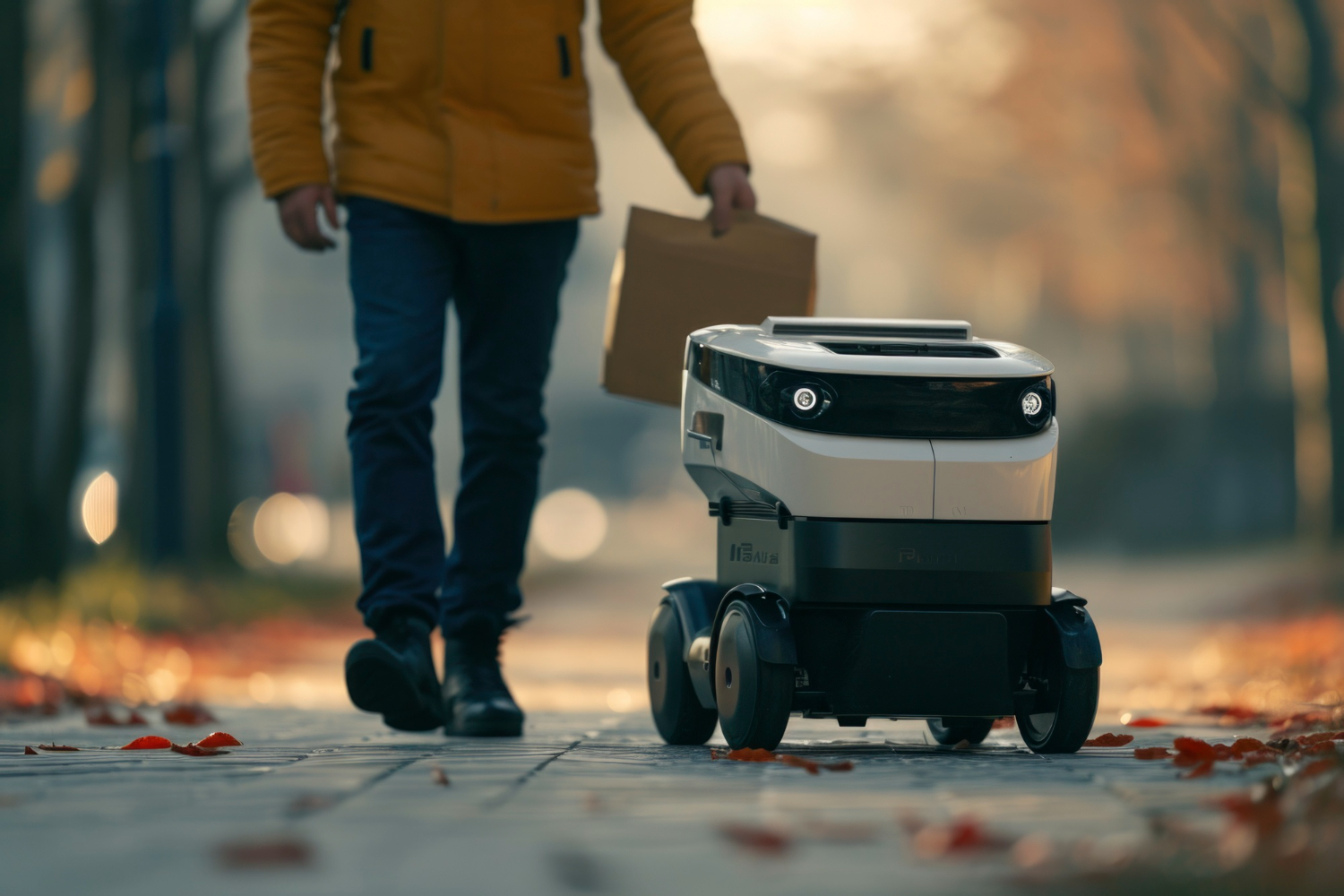
Think Minutes, Not Days.
Because Waiting Is So Last Year
The age of waiting days for an online order is fading. Today’s consumers expect essentials delivered within minutes, not hours or days. Ultra-fast delivery of groceries, personal care, ready-to-eat meals and essentials typically within 10 to 30 minutes.
Q-commerce a model built on intelligent systems that fulfil customer needs in under 30 minutes. This shift from traditional e‑commerce to instant retail is driven by mobile-first urban consumers, smarter logistics and hyperlocal networks. While this trend was once considered experimental, the evolution of consumer behaviour, coupled with advances in predictive logistics, urban warehousing and AI, has turned q-commerce into a compelling business imperative.
In today’s retail ecosystem, IMMEDIACY is no longer a premium offering, it is an operational expectation. The traditional e-commerce model, with its multi-day delivery cycles and static fulfilment structures, is rapidly being supplanted by what is now termed quick commerce. This shift represents more than technological innovation. It signifies a reconfiguration of the commercial value chain where fulfilment, delivery and experience must operate in synchrony and in real time.
The Rise of Quick Commerce: From Novelty to Necessity
At its core, quick commerce is defined by the promise of ultra-fast delivery typically of essential and high-frequency consumer products facilitated through decentralised fulfilment centres, hyperlocal logistics and predictive demand management. What began as a niche response to urban consumer impatience has now evolved into a structured, technology-led segment that is reshaping the future of retail and supply chain management.
According to market intelligence from Virtue Market Research and Coherent Market Insights, the global q-commerce industry was valued between USD 120–170 billion in 2024, with projections ranging up to USD 580 billion by 2032, depending on category inclusion and market maturity. Growth is being driven not only by food and grocery delivery but also by rapid expansion into categories such as personal care, pharmacy, consumer electronics and home essentials. The success of this model lies in its ability to shift away from reactive fulfilment to predictive, proximity-driven commerce, backed by AI algorithms that interpret patterns in consumer behaviour, local demand clusters, and inventory velocity.
The UAE’s q-commerce market alone is projected to grow from USD 170.9 million in 2025 to USD 256.6 million by 2030, reflecting a CAGR of approximately 8.5%. More strikingly, the GCC market is forecast to reach USD 22.6 billion by 2033, from a base of just over USD 2 billion in 2024. The region’s appeal is rooted in several structural advantages: a digitally connected population, high smartphone penetration, urban density, favourable regulatory frameworks and a government-led push toward smart cities and advanced logistics.
Dubai in particular, stands at the intersection of retail innovation and logistics modernisation. It offers a unique testbed for end-to-end q-commerce architecture: from dark stores and last-mile hubs to AI-powered customer engagement platforms. For both regional operators and global players eyeing Middle Eastern expansion, the UAE offers a scalable and forward-looking environment in which to pilot and refine q-commerce strategies.
Beyond Speed: Reimagining Infrastructure for Precision and Intelligence
It is vital to recognise that the value proposition of q-commerce does not rest on speed alone. In a post-convenience economy, precision, reliability and contextual intelligence have become just as critical. The most advanced q-commerce systems are those that integrate AI-driven demand forecasting, autonomous inventory optimisation and dynamic routing, enabling fulfilment networks that are not just faster, but smarter.
This evolution is also giving rise to new fulfilment typologies such as micro-warehouses, dark kitchens and hybrid retail spaces designed for pick-pack efficiency. On the customer-facing side, the rise of agentic AI, conversational commerce and hyper-personalised CX are streamlining the purchase journey to near invisibility. The result is a seamless, ambient commerce experience that anticipates needs before the consumer articulates them.
For logistics providers, this means a shift from cost-centre thinking to value-centre delivery. For retailers, it means reengineering legacy fulfilment models to be more adaptive, distributed and digitally synchronised. For technology partners, the opportunity lies in creating interoperable systems that unify supply chain visibility with customer intelligence.
QOMEX Summit: Framing the Future of Quick Commerce
As global consumer expectations evolve towards immediacy, the lines between commerce, logistics and technology continue to blur. The emergence of quick commerce has catalysed a paradigm shift in how products are discovered, transacted and delivered. What was once a convenience is now becoming the baseline standard; driven by AI, predictive logistics, hyper-local fulfilment and real-time customer intelligence.
In this context, the QOMEX Summit 2025: Quick On-Demand Market Experience Summit, scheduled for 28th and 29th October 2025 in Dubai, offers a timely and focused platform for senior leaders to engage with the next phase of transformation. It is uniquely designed for decision-makers to engage with the full spectrum of q-commerce innovation. It is not a conventional retail or supply chain event. It is a curated dialogue at the intersection of digital acceleration, autonomous fulfilment and ambient consumer ecosystems. Rather than observing innovation from the sidelines, QOMEX convenes those leading it – CXOs, founders, product architects, strategy heads, logistics operators and technology enablers.
For those navigating the shifts in urban consumption, delivery infrastructure and intelligent retail ecosystems, QOMEX presents an opportunity to be part of a larger ecosystem dialogue – one that seeks not only to respond to change, but to define it.
Conclusion
As the world accelerates toward real-time commerce, enterprises must make a deliberate shift – from fulfilling demand to anticipating it, from moving products to delivering moments. In this emerging reality, “minutes, not days” is not a metric; it is a mindset.
The organisations that succeed in this paradigm will be those that rethink their value chains, embrace agile fulfilment strategies, and invest in AI-led precision at every touchpoint. For those looking to engage meaningfully with this transformation, QOMEX offers both the lens and the leverage.
Join the conversation. Shape the future.
Visit Qomexsummit to explore delegate participation, speaking roles and partnership opportunities.